Signals
This page gathers observations of emerging cultural patterns across society, technology, politics, design, and everyday life.
Rather than predicting the future, these signals are used as starting points for interpretation. They offer glimpses into how values, behaviours, and collective imaginaries evolve over time, revealing tensions, aspirations, and shifts that may later become more visible at scale.
Some signals remain isolated observations. Others connect into broader cultural narratives that shape institutions, markets, and material culture.
Together, they form an ongoing archive of change and a way of making sense of the forces shaping contemporary life and possible futures.
Alien Signals From Retro Waves
Signal
The resurgence of mainstream discussions around non-human intelligence—from government hearings to increased media coverage and public speculation—reflects more than renewed interest in extraterrestrial life.
It points to a broader cultural moment characterised by uncertainty, declining trust in traditional sources of authority, and a growing willingness to entertain alternative explanations of reality.
As institutional narratives become increasingly contested, questions once considered fringe are moving closer to the cultural mainstream.
Interpretation
Historically, periods of social and political uncertainty often generate renewed fascination with hidden worlds, invisible actors, and unexplained phenomena.
What makes the current moment distinctive is that this fascination is emerging within highly connected, technologically sophisticated societies. Despite unprecedented access to information, certainty appears increasingly elusive.
The renewed interest in non-human intelligence may therefore reveal less about extraterrestrial life itself and more about contemporary anxieties regarding knowledge, trust, and authority.
Cultural Question
What happens when a society equipped with advanced technologies no longer feels confident in its ability to distinguish signal from noise?
And if extraordinary phenomena were present all along, would they necessarily be detected by our most sophisticated systems—or might they remain visible only through forgotten, imperfect, and deeply human ways of seeing?
Creative Response
Alien Signals From Retro Waves was created as an entry for the Assembly Winter 2026 event in Helsinki.
The project explores these questions through retro aesthetics, absurdist humour, and deliberately low-tech visual references. Rather than using nostalgia as a celebration of the past, it treats it as an alternative perceptual framework. The world of analogue televisions, VHS artefacts, and suburban routines becomes a stage where extraordinary events coexist with everyday life.
Through the unlikely encounter between aliens and grannies, the video imagines a reality in which the most important signals are not hidden by technological limitations, but by cultural assumptions about where we should be looking.
The work also reflects on the culture of technological experimentation and digital creativity historically associated with demoscene communities such as Assembly, where technical constraints have often become catalysts for imagination and alternative ways of seeing.
Production Notes
Original music composed in GarageBand.
Video footage sourced from Pexels, with additional imagery edited using Unfold. Final editing completed in iMovie.
Signal
Practices historically associated with divination—including astrology, tarot, and ritual-based forms of meaning-making—have experienced renewed popularity among Millennials and Generation Z.
At the same time, the most digitally connected generations in history report increasing levels of loneliness and social isolation. Despite unprecedented access to communication technologies, many individuals struggle to build enduring forms of connection and belonging.
These parallel developments suggest that the resurgence of divination may reflect more than spiritual curiosity alone. It may signal a broader search for meaning, certainty, and human connection in increasingly fragmented social environments.
Interpretation
Divination practices have historically helped people navigate uncertainty, providing narratives through which to understand relationships, identity, and the future.
Today, their renewed popularity emerges within a context where many traditional structures of community, ritual, and social interaction have weakened or transformed.
The appeal of astrology, tarot, and similar practices may therefore reveal a deeper cultural desire: not necessarily to predict what comes next, but to restore a sense of orientation, connection, and significance in everyday life.
Seen through this lens, the growing interest in ritual is less about the future than about the search for meaningful relationships in the present.
Cultural Question
What forms of intimacy become possible—or impossible—when connection is increasingly mediated through platforms designed for speed, optimisation, and endless choice?
And what might contemporary society learn from older rituals of courtship, gathering, and shared experience that required time, patience, and physical presence?
Creative Response
Divination of the Past explores these questions by inverting the traditional logic of divination.
Rather than looking forward, the project looks backward. Through a sequence of historical scenes, gestures, and encounters, the video traces the enduring human desire for connection across different periods and cultural settings.
Meal sharing, dancing, courtship, and communal rituals become symbols of slower forms of intimacy—forms built through presence, repetition, and mutual participation rather than instantaneous selection.
The work suggests that the growing appeal of divination may not simply reflect curiosity about the future, but nostalgia for modes of connection that feel increasingly difficult to sustain in contemporary life.
Viewed from this perspective, the future of intimacy may depend less on technological optimisation and more on the rediscovery of rituals that create space for human relationships to unfold over time.
Production Notes
Original music composed in GarageBand.
Video footage sourced from Pexels, with additional imagery edited using Unfold. Final editing completed in iMovie.
Divination Of The Past
Wabi Sabi In The West
Signal
In 2021, Merriam-Webster formally added the Japanese term wabi-sabi to its dictionary, reflecting the growing adoption of a concept that had already gained significant traction across Western design, lifestyle, and wellness cultures.
Beyond language, the influence of wabi-sabi can be observed in the increasing popularity of practices and products associated with imperfection, craftsmanship, and material authenticity—from kintsugi repair kits and handcrafted ceramics to the rise of matcha cafés and minimalist interior aesthetics.
The diffusion of the concept suggests a broader cultural appetite for alternative ways of relating to beauty, consumption, and everyday life.
Interpretation
The appeal of wabi-sabi extends beyond aesthetics.
At a time characterised by digital perfection, algorithmic optimisation, and constant self-curation, the philosophy offers a contrasting value system—one that embraces impermanence, incompleteness, and natural ageing.
Its popularity in Western contexts may therefore reveal a growing desire for experiences perceived as slower, more grounded, and more authentic.
What is being adopted is not simply a visual style, but a different relationship with time, materiality, and imperfection.
Cultural Question
What happens when a cultural philosophy rooted in specific historical and spiritual traditions becomes detached from its original context and absorbed into global consumer culture?
And does the growing popularity of concepts such as wabi-sabi indicate a genuine shift in values—or simply a new aesthetic language through which contemporary anxieties are expressed?
Visual Exploration
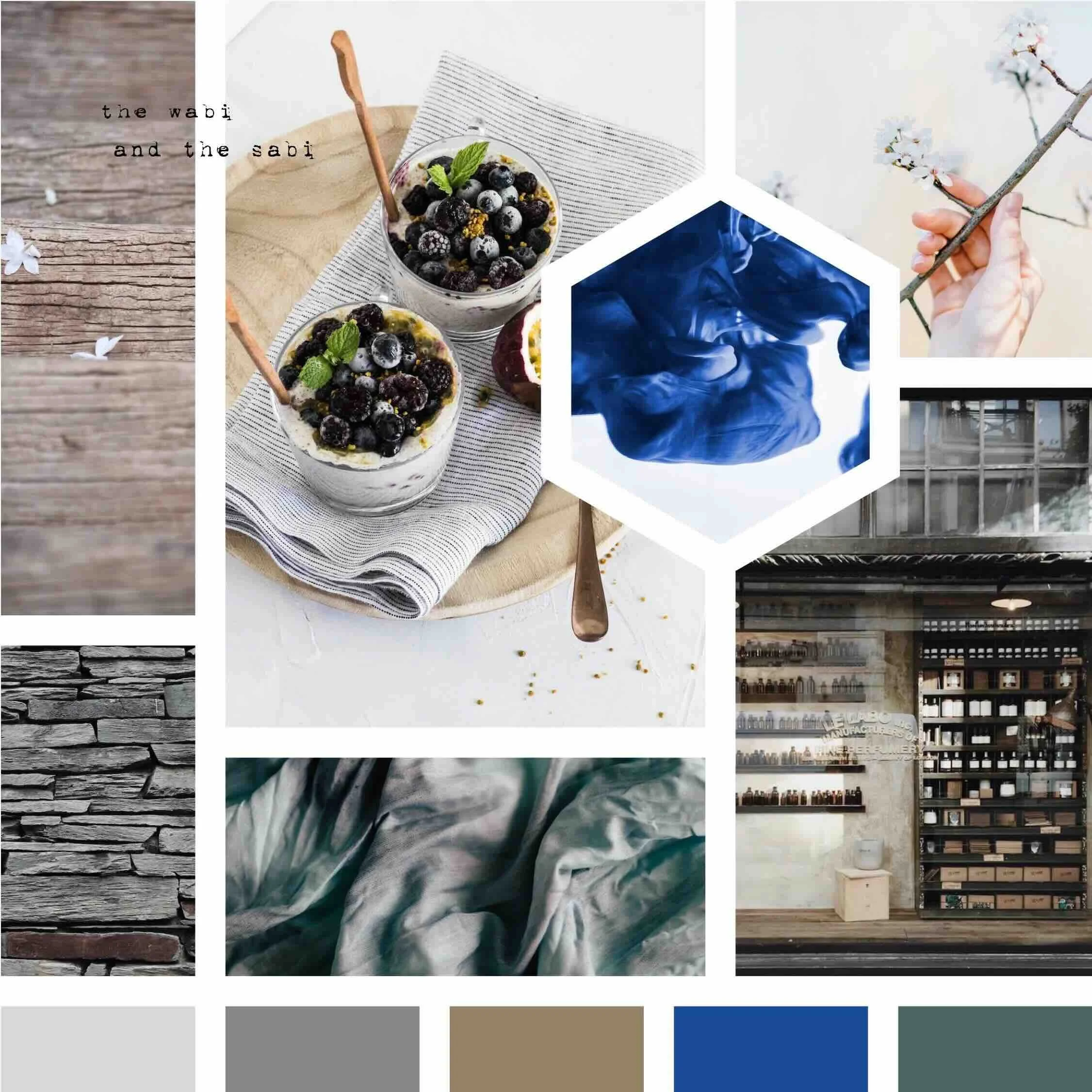
This moodboard explores how wabi-sabi is being translated within contemporary Western visual culture.
The selected imagery focuses on material textures, muted tones, signs of wear, handcrafted objects, and spaces that privilege atmosphere over perfection. Together, these elements illustrate how ideas of imperfection, restraint, and natural ageing are being reinterpreted across design, interiors, food culture, and lifestyle branding.
Rather than documenting traditional Japanese aesthetics, the board examines the Western imagination of wabi-sabi and the cultural desires that may be driving its adoption.
Human-Centred Cities
Signal
As global urban populations continue to grow, reaching an estimated 65% of the world’s population in urban areas, a renewed focus on human-centred urban planning is emerging across policy, design, and civic discourse.
This approach reframes cities away from infrastructure prioritised around cars, administrative efficiency, or economic throughput, and instead toward systems organised around human well-being, accessibility, and everyday lived experience.
Frameworks such as the “15-minute city” and experimental models like Barcelona’s Superblocks illustrate this shift, introducing spatial configurations that prioritise walkability, reduced traffic dominance, shared public space, and local accessibility of essential services.
Interpretation
At a deeper level, the resurgence of human-centred urbanism reflects a cultural reassessment of what cities are for.
Cities are increasingly being reimagined not only as engines of productivity and mobility, but as environments for social connection, care, play, and daily quality of life.
This shift suggests a broader reorientation in urban values: from optimisation and throughput toward proximity, accessibility, and shared experience.
Urban space becomes less a neutral container for activity, and more an active framework shaping how people relate to time, each other, and their environment.
Cultural Question
What does it mean to design cities around lived experience rather than infrastructure efficiency?
And how might urban environments change when movement, encounter, and everyday rituals become central design parameters rather than secondary outcomes?
Visual Exploration
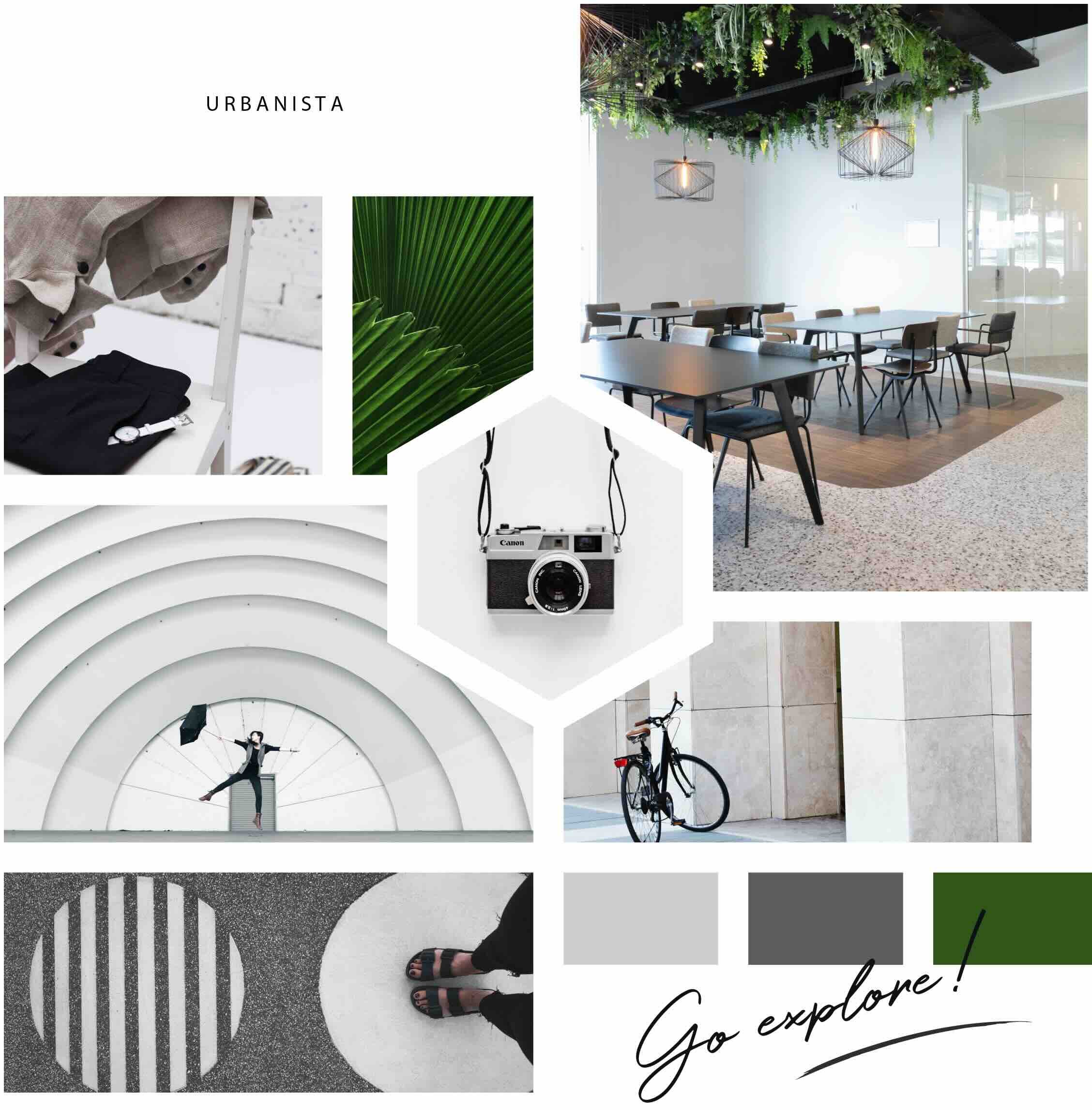
This moodboard explores the aesthetic and behavioural implications of human-centred urbanism.
It brings together imagery of walkable streets, bicycle-oriented mobility, green infrastructure, shared public spaces, and informal forms of social interaction within the city.
Rather than documenting specific urban models, the board explores a broader cultural atmosphere: a shift toward slower, more porous, and more participatory urban life, where the boundaries between movement, leisure, and community become increasingly fluid.
Signal
In contemporary design and lifestyle culture, minimalism is increasingly being reinterpreted through the lens of warmth, atmosphere, and sensory experience.
Rather than emphasising pure reduction or visual austerity, emerging aesthetic directions incorporate natural light, shadow play, and material softness as central components of spatial experience.
Concepts such as the Japanese term komorebi—describing sunlight filtering through trees and surfaces—have gained renewed attention in global design discourse, alongside practices associated with “soft minimalism” and wellbeing-oriented interiors.
This suggests a shift in how luxury is being defined, moving away from material accumulation or visual restraint alone, toward experiential qualities such as atmosphere, calm, and perceptual comfort.
Interpretation
At a deeper level, this shift reflects changing relationships between attention, perception, and everyday environments.
In contexts characterised by digital saturation, cognitive overload, and constant informational input, there is an increasing cultural desire for environments that restore sensory balance.
Light, shadow, and natural materiality become more than aesthetic choices—they function as tools for regulating experience, shaping mood, and creating a sense of psychological ease.
In this sense, design is increasingly engaged in the construction of perceptual environments rather than purely visual compositions.
Cultural Question
How do aesthetic systems respond when attention itself becomes a scarce resource?
And what does it mean when qualities such as light, silence, and material softness begin to function as forms of luxury?
Light as Luxury
Visual Exploration
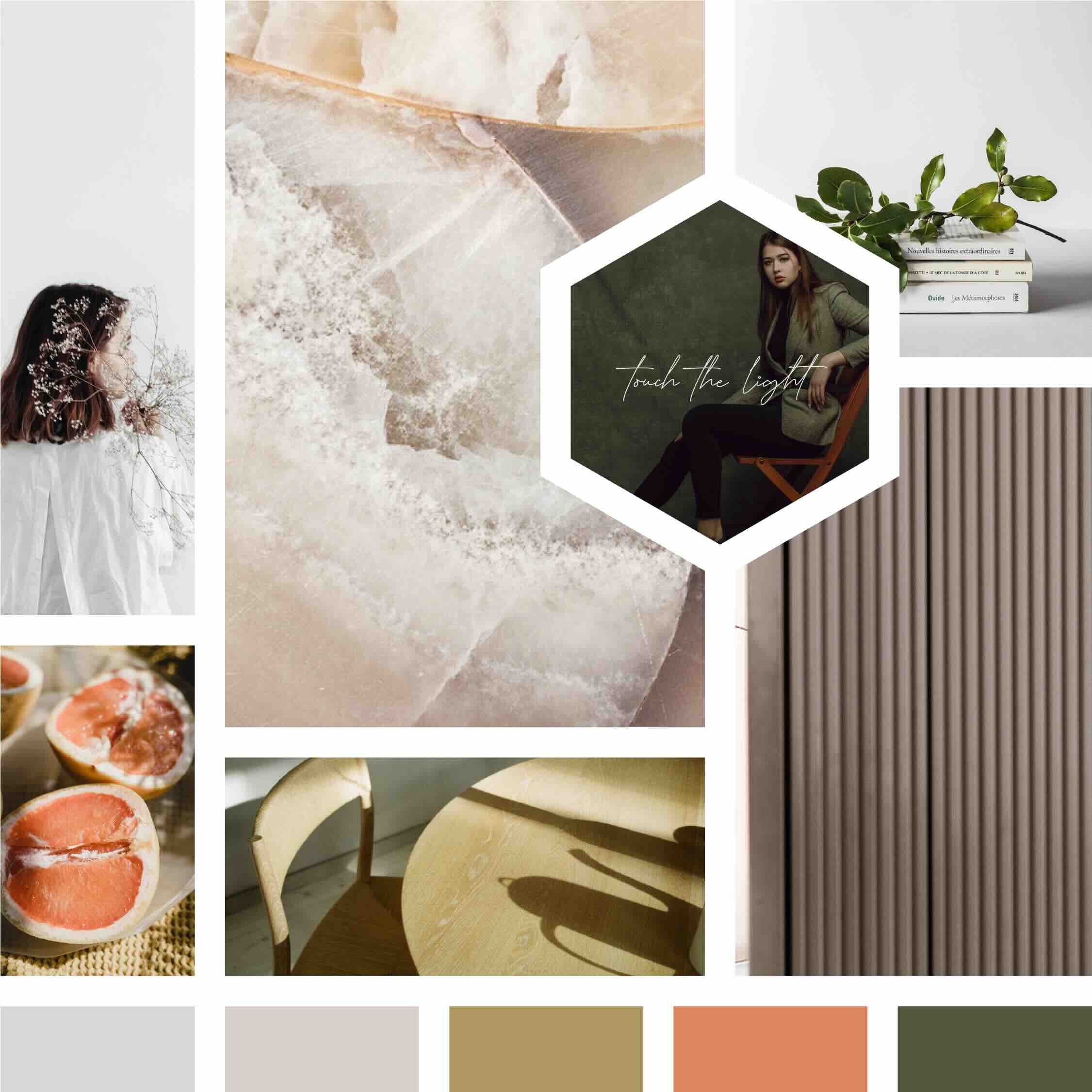
This moodboard explores the intersection between minimalism, natural light, and sensory wellbeing.
It focuses on the interaction between sunlight, architectural surfaces, and natural materials, highlighting how atmosphere is constructed through subtle environmental conditions rather than explicit design gestures.
Rather than documenting a style trend, the board explores a broader cultural shift toward environments that prioritise calm, perceptual clarity, and embodied experience in response to increasing digital and cognitive saturation.