

Cultural Systems & Futures
Projects where I analyze how innovation in large-scale systems, institutions, and technologies shape work cultural and societal futures
World Food Programme
Enabling Digital Transformation Across a Global Organisation
Cultural Signal
Large international organisations are undergoing a quiet but profound shift: from fragmented, legacy-driven operational systems toward more integrated, data-informed and user-centred digital infrastructures.
In humanitarian and public-sector environments, this transformation is not only technical. It also reflects a broader cultural tension between:
established institutional routines
and emerging expectations of speed, transparency, and interoperability
Within this context, digital systems become more than tools—they become expressions of how an organisation understands coordination and service delivery.
Interpretation
Digital transformation in large-scale humanitarian institutions is rarely constrained by technology alone.
It reveals deeper systemic dynamics:
how organisational knowledge is structured and shared
how decision-making authority is distributed
how risk, accountability, and trust are managed across silos
how global operations reconcile standardisation with contextual flexibility
From this perspective, transformation is not the replacement of systems, but the renegotiation of how an organisation coordinates itself under changing internal and external conditions.
Translation (Intervention Lens)
Within this environment, my role focuses on translating complex organisational dynamics into coherent pathways for change across people, processes, and systems.
This includes:
Coordinating the delivery of digital transformation initiatives within a long-term organisational modernisation roadmap (Identity Management domain)
Facilitating alignment between operational teams, leadership, and technical partners to build shared direction and prioritisation
Translating organisational needs into structured delivery and investment approaches
Supporting the redesign of core digital capabilities and associated business processes to improve scalability, usability, and interoperability
Establishing governance and decision-making mechanisms that enable transparency and cross-functional coordination
Output
The tangible outputs of this work include:
improved coordination across business and technology stakeholders
structured governance frameworks for decision-making and prioritisation
clearer alignment between organisational needs and technical delivery
enhanced foundational digital capabilities supporting identity and access management
more coherent transformation pathways across fragmented operational systems
These outputs aim to increase both system efficiency and organisational adaptability within a complex international context.
Reflection
This work reinforces the idea that digital transformation is fundamentally a process of organisational interpretation and reconfiguration, not only technical change.
Technology exposes existing cultural and structural patterns within institutions:
how decisions are made
how collaboration is enabled or constrained
how complexity is managed across distributed systems
Successful transformation therefore depends on the ability to read these underlying dynamics and create conditions where new ways of working can emerge and stabilise over time.


Transforming Nutrition Treatments Through Digital Infrastructure
Cultural Signal
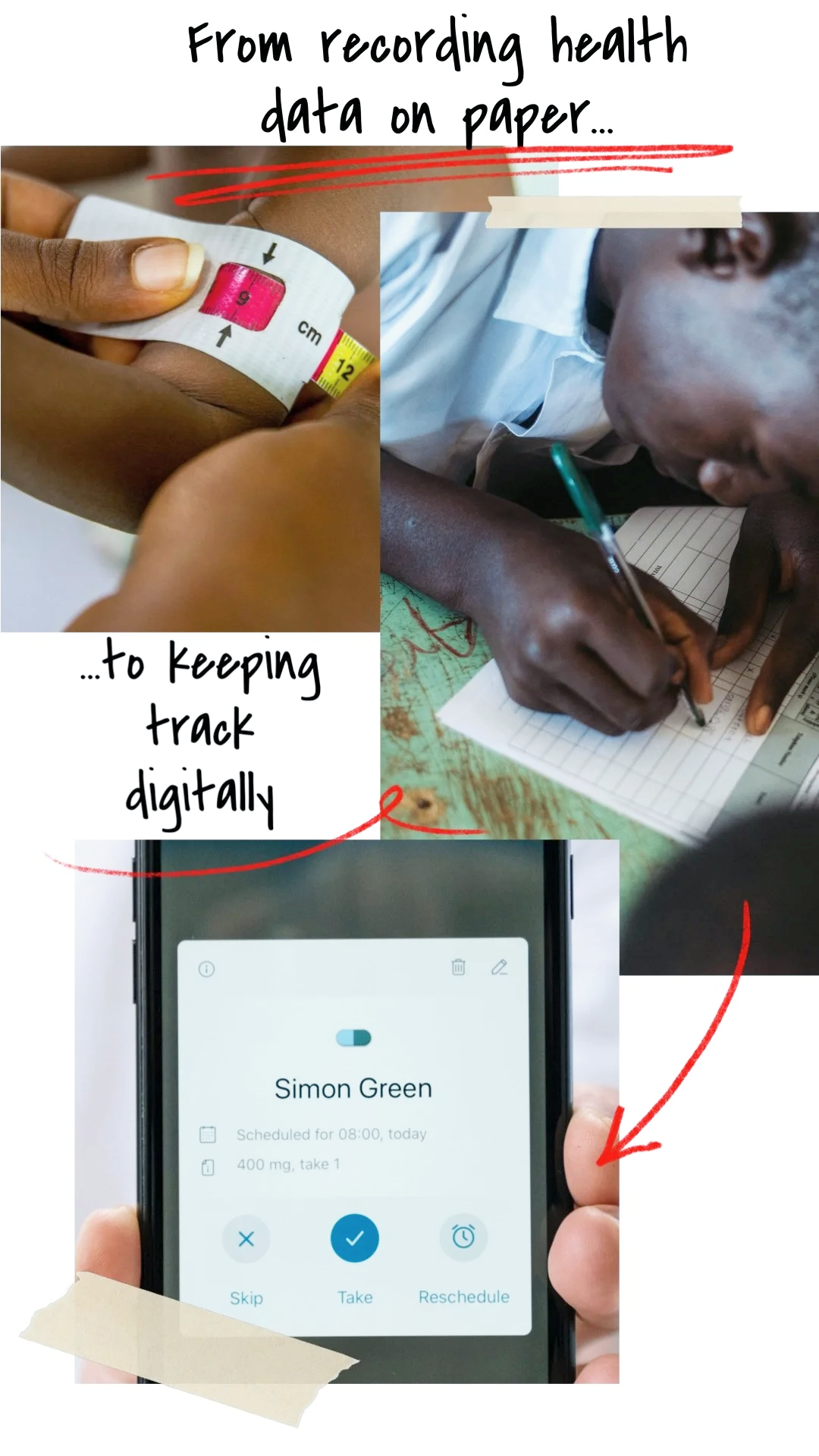
Across global humanitarian health programmes, there is a growing shift from paper-based, fragmented treatment records toward integrated digital systems capable of tracking care pathways in real time.
In contexts such as malnutrition treatment, this shift is not simply administrative. It reflects a broader transformation in how care is recorded, coordinated, and understood across geographically and infrastructurally diverse environments.
Digital tools increasingly become mediators between local care delivery and global coordination systems, shaping how knowledge about vulnerability, treatment, and recovery is produced and shared.
Interpretation
The transition from paper-based to digital nutrition treatment systems exposes a fundamental systemic tension:
the need to standardise care pathways at scale while preserving sensitivity to radically different operational contexts.
This includes variations in:
treatment protocols across countries
infrastructure constraints (connectivity, device access, field conditions)
user capabilities and digital literacy levels
institutional expectations for reporting, accountability, and comparability
From a systems perspective, the core challenge is not digitisation itself, but the translation of heterogeneous care realities into a coherent yet flexible informational structure.
Translation (Intervention Lens)
Within this context, my role as Digital Product Manager and Business Analyst focused on bridging operational, technical, and user realities into a coherent product direction.
This included:
Facilitating collaboration between cross-functional technical teams to ensure alignment across development streams
Mapping user journeys and application flows to translate field-based treatment processes into digital system logic
Supporting product prioritisation by balancing user needs with organisational goals and implementation constraints
Conducting QA processes and contributing to the definition of adoption and effectiveness measurement approaches
The work operated at the intersection of product design, systems coordination, and organisational translation—ensuring that the platform remained grounded in real-world treatment practices while scalable across diverse operational environments.
Output
The resulting work contributed to the development of a digital platform (CODA) supporting the tracking of malnutrition treatment cycles across multiple countries.
Key outcomes included:
improved structuring of user journeys reflecting real treatment workflows
enhanced alignment between technical development and field operational needs
clearer prioritisation of product features based on user and organisational value
improved testing and evaluation processes for system adoption and usability
strengthened coherence between local implementation contexts and global reporting requirements
Reflection
This work highlighted that digital transformation in humanitarian health systems is fundamentally a process of translation between heterogeneous realities.
Effective systems must accommodate:
variability in local practice
constraints of infrastructure and access
differences in user capability and context
requirements for global standardisation and accountability
Ultimately, successful implementation depends less on the technical system itself and more on the ability to design for adaptation, ensuring that digital infrastructures support, rather than replace, the complexity of real-world care delivery.
Cultural Signal
Across large international organisations, evaluation systems are a key mechanism through which accountability, learning, and legitimacy are produced and maintained.
In humanitarian contexts, project evaluations are not only retrospective assessments of effectiveness. They are also cultural instruments that shape how organisations define success, encode lessons learned, and translate field realities into institutional knowledge.
This creates an ongoing tension between accountability to external stakeholders (such as donor countries) and internal learning processes that inform future programming.
Interpretation
Evaluation systems function as more than reporting tools—they are epistemic infrastructures that determine what an organisation sees, values, and remembers.
Within this system, several structural tensions emerge:
accountability vs. learning (compliance-driven reporting vs. adaptive improvement)
centralisation vs. decentralisation (standardised evaluation frameworks vs. local contextual adaptation)
quantitative measurement vs. qualitative understanding of impact
short-term reporting cycles vs. long-term organisational learning
From this perspective, the core challenge is not simply improving evaluation processes, but shaping how institutional knowledge is generated and integrated into future decision-making.
Strengthening Organisational Learning Through Evaluation Systems
Translation (Intervention Lens)
Within this context, my role as Data Analyst and Consultant focused on supporting the development of more coherent and scalable evaluation and learning systems.
This included:
Conducting background literature research and data analysis to support evaluation reports
Supporting capacity-building and training programmes in decentralised evaluation methodologies
Contributing to the design of a digital, organisation-wide quality assurance framework for evaluation reporting
Supporting the translation of evaluation standards into accessible systems used across global operational contexts
The work contributed to strengthening the consistency, accessibility, and usability of evaluation practices within a distributed international organisation.
Output
The outcomes of this work included:
improved analytical foundations for evaluation reporting processes
strengthened capacity for decentralised evaluation practices across teams
development of more structured and accessible quality assurance frameworks for evaluation reporting
increased coherence between evaluation standards and field-level implementation contexts
enhanced organisational ability to systematically capture and reuse learning across projects
Reflection
This work highlighted that evaluation systems are not neutral technical mechanisms, but active structures that shape organisational memory and learning.
When designed effectively, they can shift from being compliance-oriented reporting tools to becoming infrastructures for continuous learning and adaptive improvement.
This requires not only methodological rigour, but also attention to how knowledge is produced, shared, and reintegrated into future decision-making processes across complex institutional environments.

Pompeu Fabra University
Understanding Trust in Digital Currency Systems and Institutional Governance
Cultural Signal
As governments and central institutions explore the potential adoption of central bank digital currencies (CBDCs), most discourse has focused on financial architecture, monetary policy, and technical implementation.
However, a parallel set of emerging concerns points to deeper cultural and political dynamics: how individuals perceive institutional legitimacy, data governance, and systemic trust in an increasingly digitised financial environment.
In this context, digital currency is not only a financial instrument, but also a symbolic extension of institutional authority and public trust in governance structures.
Interpretation
The adoption of state-issued digital currencies cannot be fully understood through financial or technological frameworks alone.
It is fundamentally shaped by the relationship between:
institutional trust and perceived legitimacy
data governance practices and privacy expectations
individual political identity and orientation toward state authority
broader geopolitical stability and confidence in international systems
From this perspective, digital currency adoption becomes a cultural and political phenomenon, where financial infrastructure is inseparable from questions of governance, surveillance, and institutional credibility.
This suggests that user adoption models must integrate behavioural, political, and institutional trust dimensions alongside economic analysis.
Translation (Research Contribution)
Within this academic context, my doctoral research connected interdisciplinary literatures across finance, political science, and digital governance.
My contribution focused on:
Synthesising research on financial innovation (CBDCs and stablecoins) with studies on institutional trust, data privacy, and public perception of digital systems
Developing the hypothesis that adoption of state-backed digital currencies is primarily shaped by trust in institutional and geopolitical systems rather than purely financial utility
Examining how political orientation and perceptions of governance legitimacy influence acceptance of centrally issued digital financial instruments
Situating digital currency adoption within broader shifts in the international political order and evolving public trust in institutions
This work positioned digital currency not as a purely technical innovation, but as a socio-political system embedded in questions of governance and legitimacy.
Output
The research produced:
an interdisciplinary analytical framework connecting financial innovation with institutional trust and political perception
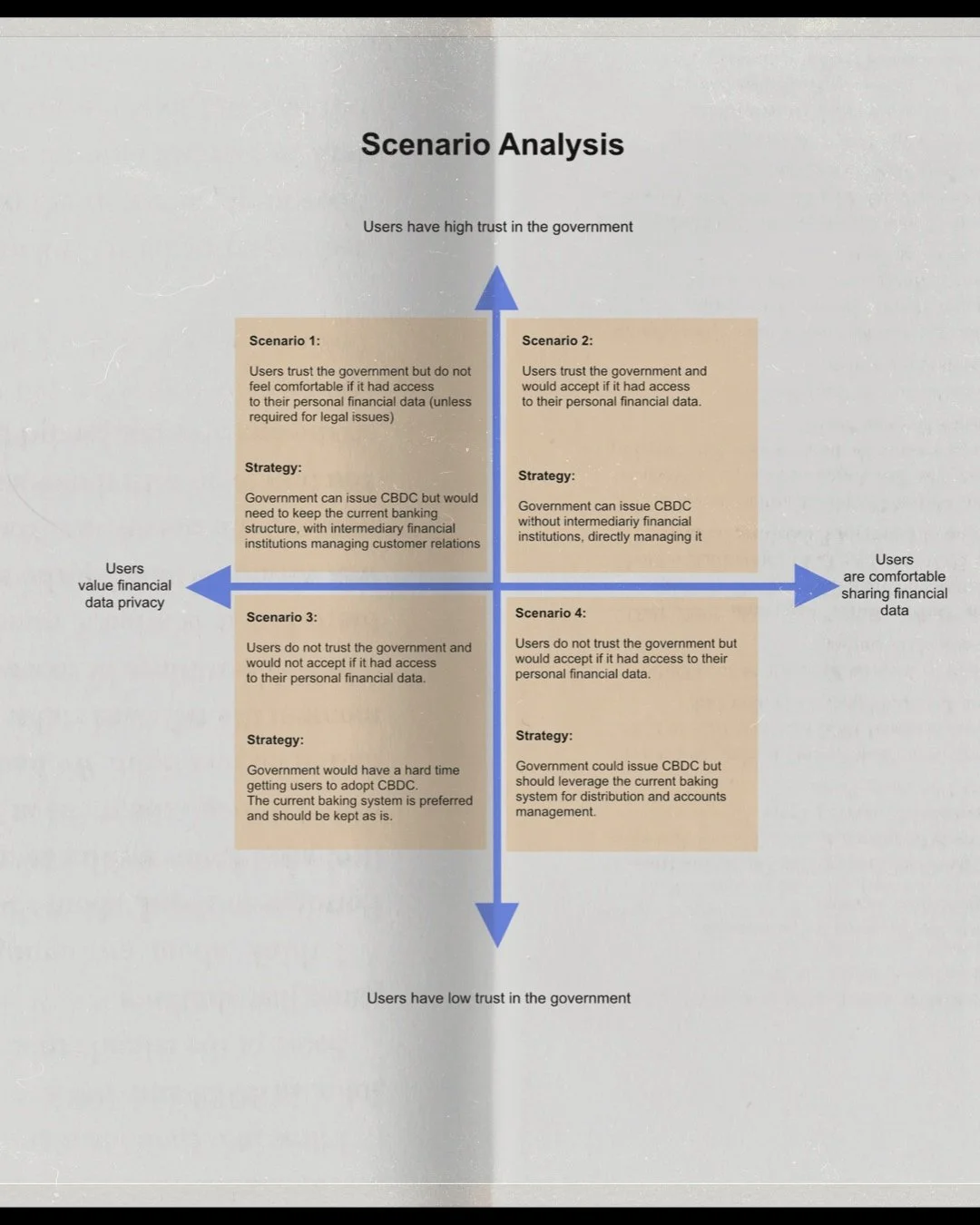
a scenario analysis exploring potential adoption pathways for central bank digital currencies
a synthesis of literature across economics, political science, and digital governance studies
a conceptual model highlighting trust as a central variable in digital currency adoption
Reflection
This research reinforced the importance of understanding technological systems as embedded within broader cultural and political structures.
In the case of digital currencies, adoption is not determined solely by efficiency or usability, but by the degree to which users perceive institutions as legitimate, stable, and trustworthy.
As global political dynamics continue to evolve, questions of institutional trust and governance legitimacy are likely to become even more central to the adoption of digital financial infrastructures.
This underscores the need for more integrated research approaches that combine technical, behavioural, and geopolitical perspectives when studying emerging financial systems.

Critical Synthesis: A Cultural Systems Practice
Across institutional systems, digital infrastructures, research environments, and material culture, my work consistently focuses on how societies translate change into lived experience.
Whether working within humanitarian organisations, designing digital products, conducting academic research, or exploring cultural and aesthetic systems, I approach each context through the same lens:
the relationship between large-scale systemic structures and the everyday realities they produce.
Across these projects, I am not only designing systems, products, or analyses, I am interpreting how cultural, political, and technological forces shape behaviour, trust, meaning, and form.
This results in a practice that moves across three interconnected layers:
Systemic layer: how institutions structure information, decision-making, and governance
Translational layer: how those systems become operational through tools, processes, and interfaces
Cultural layer: how these systems ultimately shape perception, behaviour, and aesthetic expression in everyday life
Rather than treating these domains as separate, my work focuses on the transitions between them—how meaning, structure, and experience continuously inform one another.
This perspective allows me to work across futures thinking, design research, cultural analysis, and systems transformation while maintaining a consistent interpretive approach.