
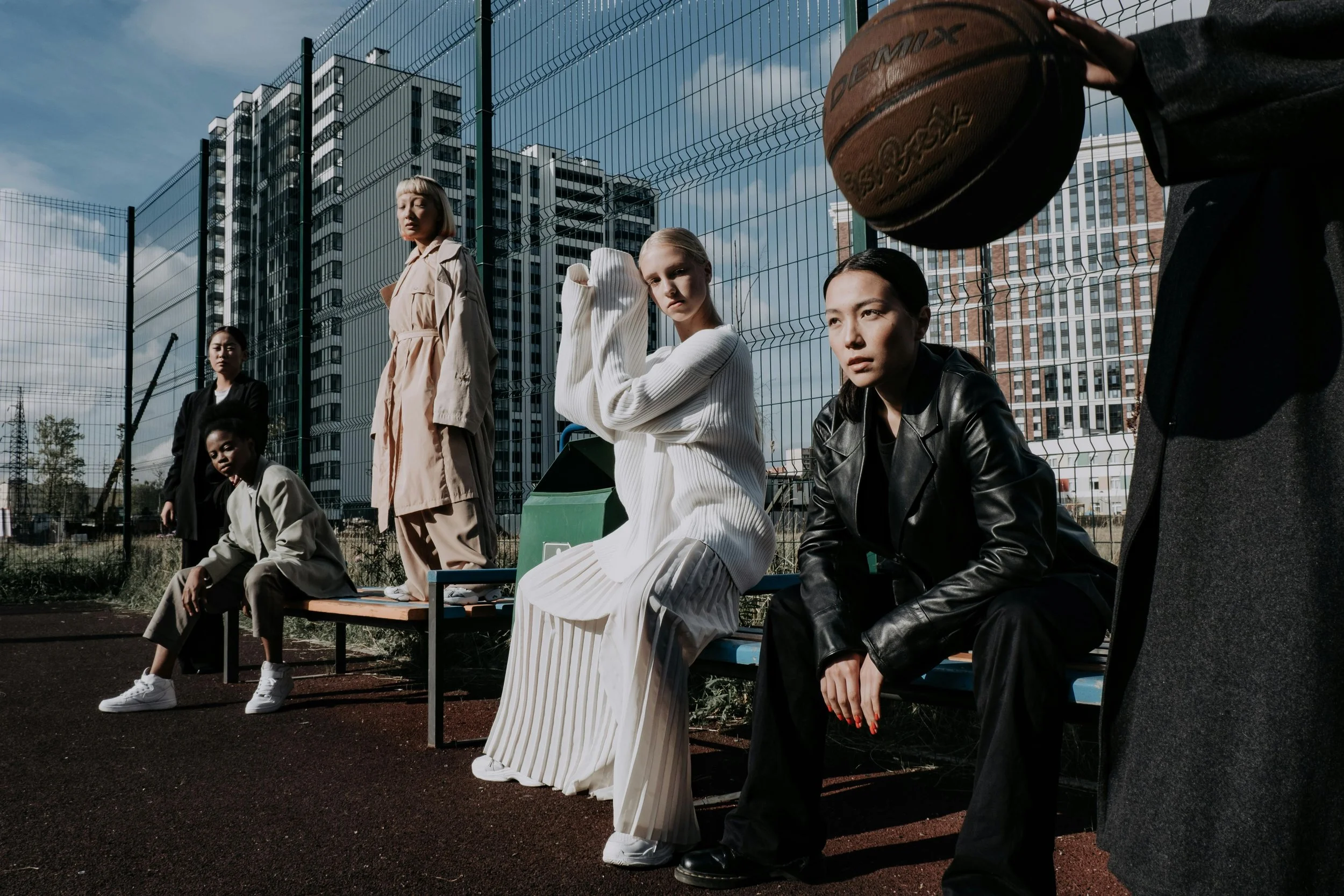
Material Culture & Aesthetics
Explorations of how cultural change manifests in material form, lifestyle aesthetics, and visual cultures.
Romantic Office Dandy: Designing for Transitional Identities
Cultural Signal
The boundaries between professional and personal life have long been reflected in the way people dress. During the late 2000s and early 2010s, increasing workplace flexibility, changing social habits, and growing awareness of sustainable consumption began to challenge the idea that different contexts required entirely separate wardrobes.
At the same time, many women were navigating multiple social roles throughout the day, moving directly between professional environments and personal activities without the time or desire for complete outfit changes.
This created an opportunity to rethink clothing not as fixed garments for specific occasions, but as adaptable systems capable of supporting different expressions of identity.
Interpretation
Fashion functions as a social interface between individuals and their environments, communicating belonging, professionalism, creativity, and personal values.
The challenge explored in this project was how clothing could support transitions between different social contexts while reducing the need for excessive consumption.
Rather than designing separate garments for work and leisure, the collection investigated how flexibility could be embedded directly into the design of garments and accessories.
This approach positioned adaptability as both a practical feature and a response to emerging conversations around sustainability, versatility, and changing patterns of everyday life.
Translation (Intervention Lens)
Developed during my participation in a fashion incubator programme in Borås, Sweden, the collection explored how multifunctional design could support fluid transitions between professional and social environments.
Drawing inspiration from the structured tailoring and earthy colour palette of 1980s women's office wear, I introduced elements of vintage romanticism to soften and reinterpret traditional professional aesthetics.
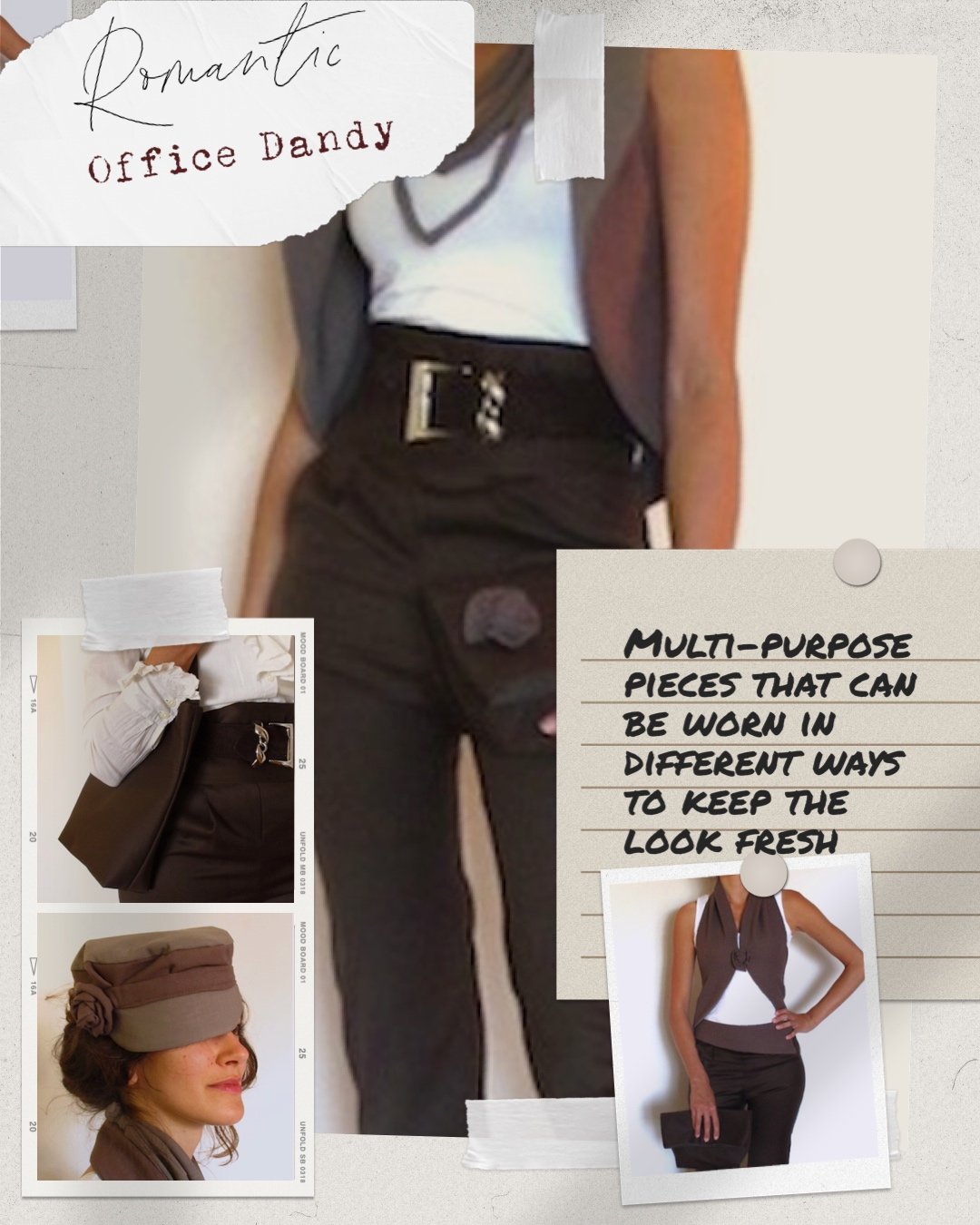
The resulting collection included:
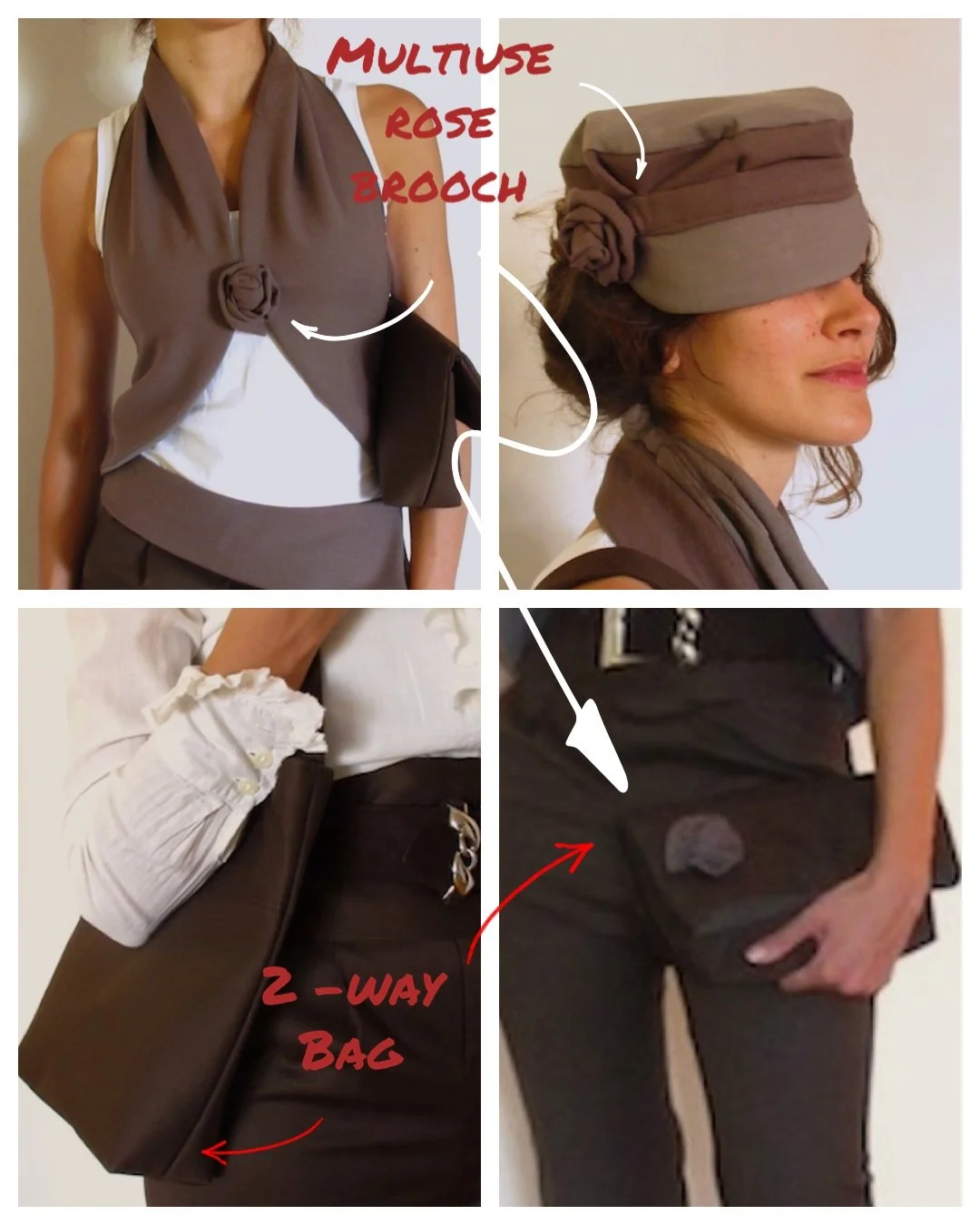
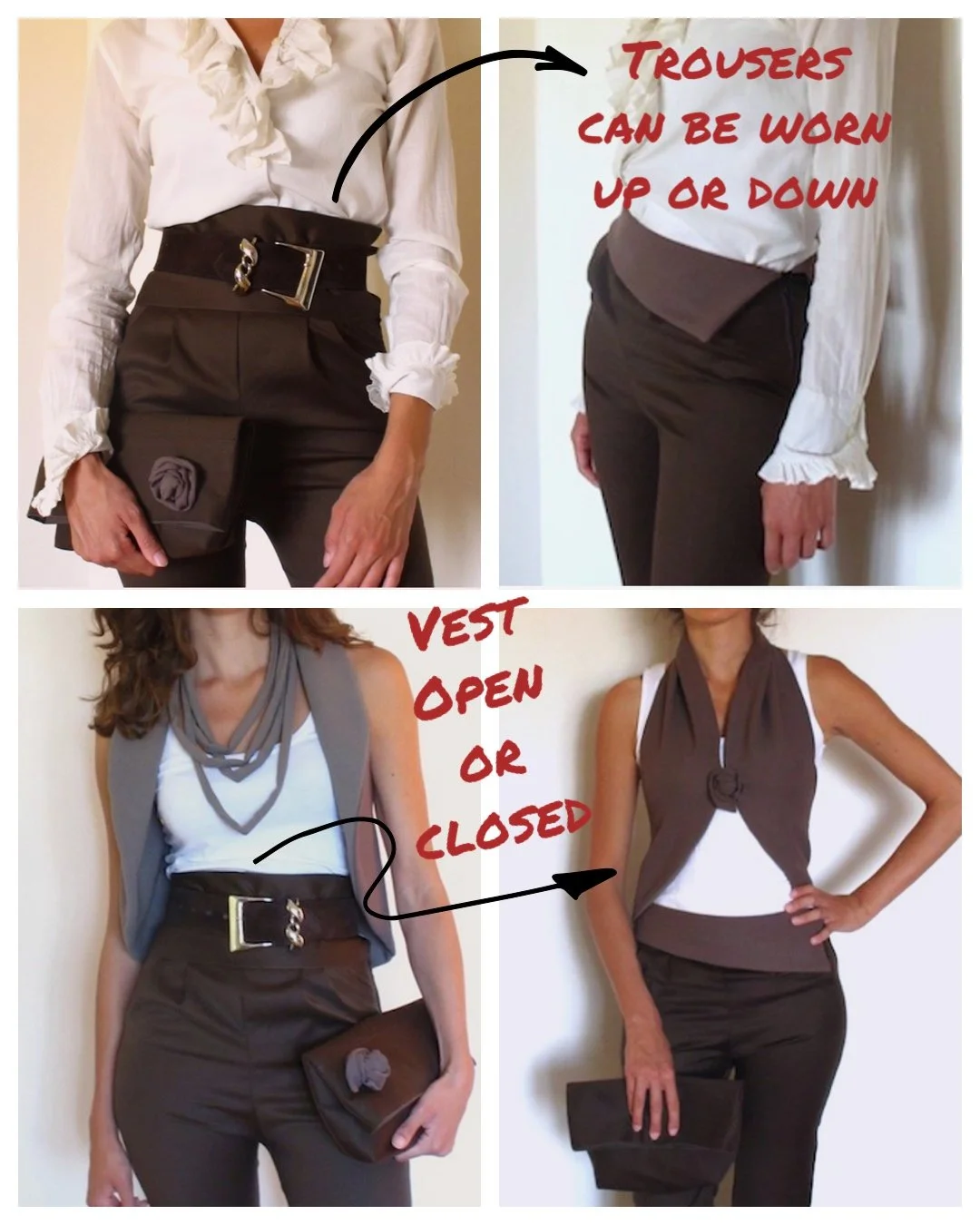
Tailored wool trousers designed to be worn either high-waisted or with the waistband folded down
A double-face vest that could be worn open or closed using a removable rose brooch
A shoulder bag with a detachable strap, allowing it to transform into a hand pouch
Matching accessories created from fabric offcuts to minimise material waste
The collection sought to create multiple styling possibilities from a limited number of pieces, encouraging versatility and longevity.
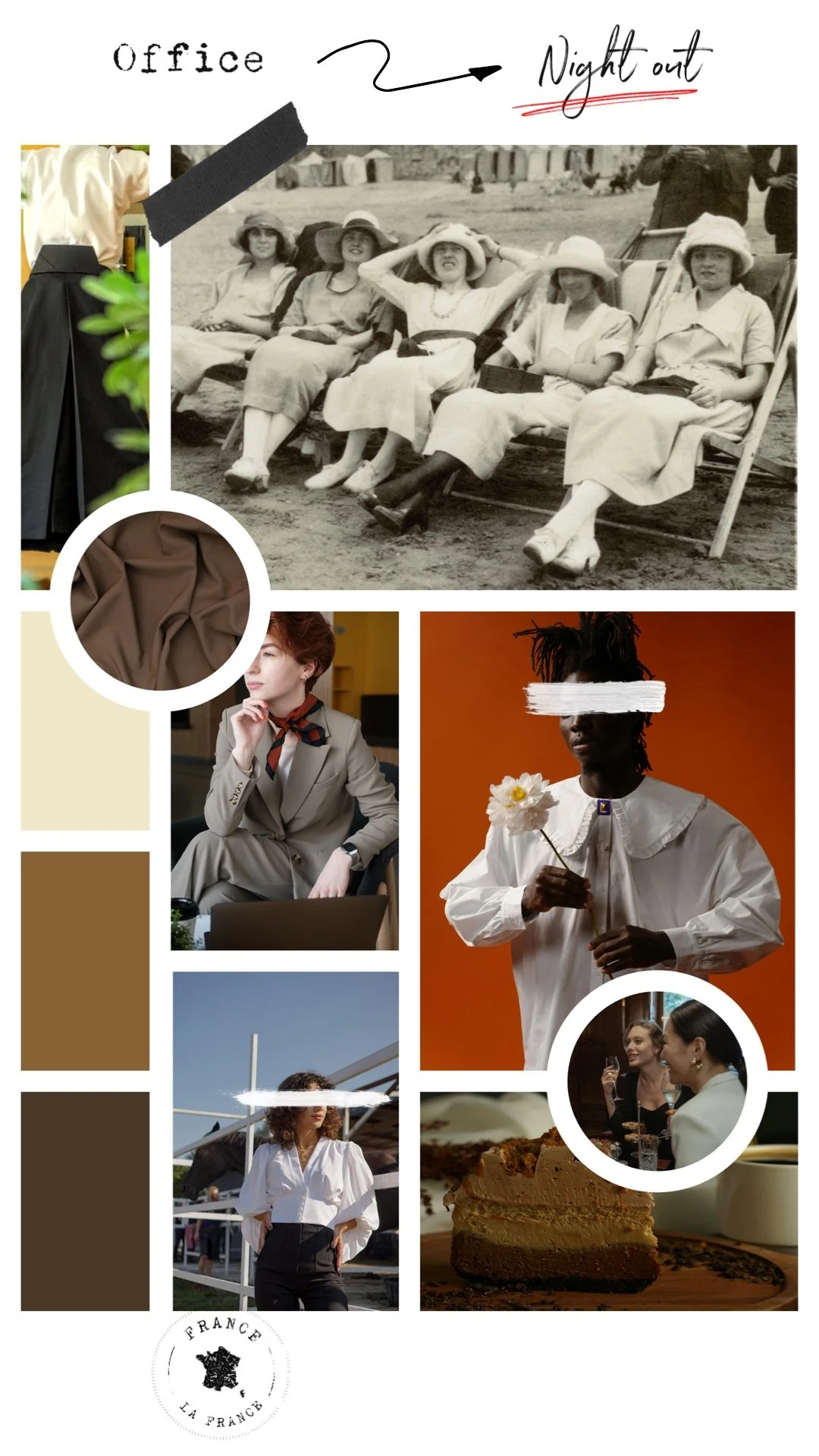
Output
The project resulted in a capsule collection centred on adaptability, multi-functionality, and material efficiency.
Key outcomes included:
A coherent fashion concept exploring transitions between professional and social settings
Garments and accessories designed to support multiple modes of use
Integration of zero-waste principles through the reuse of production remnants
Recognition as a finalist in the Show Up Award competition (2011 edition) held in Borås, Sweden
Reflection
This project reinforced the idea that fashion can act as a site of cultural innovation, responding to changing lifestyles and social expectations through material design.
Beyond aesthetics, clothing can influence how people navigate different identities, environments, and routines throughout their daily lives.
Looking back, the themes explored in the collection—adaptability, multi-functionality, and sustainability—anticipated conversations that have since become increasingly central within contemporary fashion and lifestyle design.
The project highlighted how design can contribute to more flexible and resource-conscious ways of living, translating broader cultural shifts into tangible everyday experiences.
Cultural Signal
The rise of global manufacturing has made fashion and accessories increasingly accessible, but often at the cost of local specificity and material storytelling. As products become standardised and mass-produced, opportunities to express personal narratives, cultural curiosity, and a sense of place through everyday objects can become diminished.
At the same time, increased global mobility and exposure to different cultures have encouraged consumers to seek products that carry a stronger sense of authenticity, craftsmanship, and connection to the wider world.
This tension between global standardisation and cultural specificity formed the starting point for Nu-Nomad.
Interpretation
Bags are more than functional objects. They accompany daily movement, accumulate personal meaning, and communicate aspects of identity and lifestyle.
The project explored how everyday accessories could become carriers of cultural narratives, connecting distant places, textile traditions, and personal experiences through material design.
Rather than treating travel as a source of visual inspiration alone, the work considered how fabrics, patterns, and craft traditions embody histories of exchange, movement, and cultural encounter.
This perspective positioned the bag not simply as a product, but as a material interface between everyday life and broader cultural geographies.
Translation (Intervention Lens)
Founded in 2010, Nu-Nomad was developed as a small-scale design business producing limited collections of handmade bags using textiles sourced during travels.
The project combined entrepreneurial experimentation, product design, and material research.
Collections were typically organised around cultural and geographical narratives, including:
On The Silk Road
A collection inspired by historical trade routes and the movement of materials, ideas, and aesthetics across Western Asia, India, and Japan.
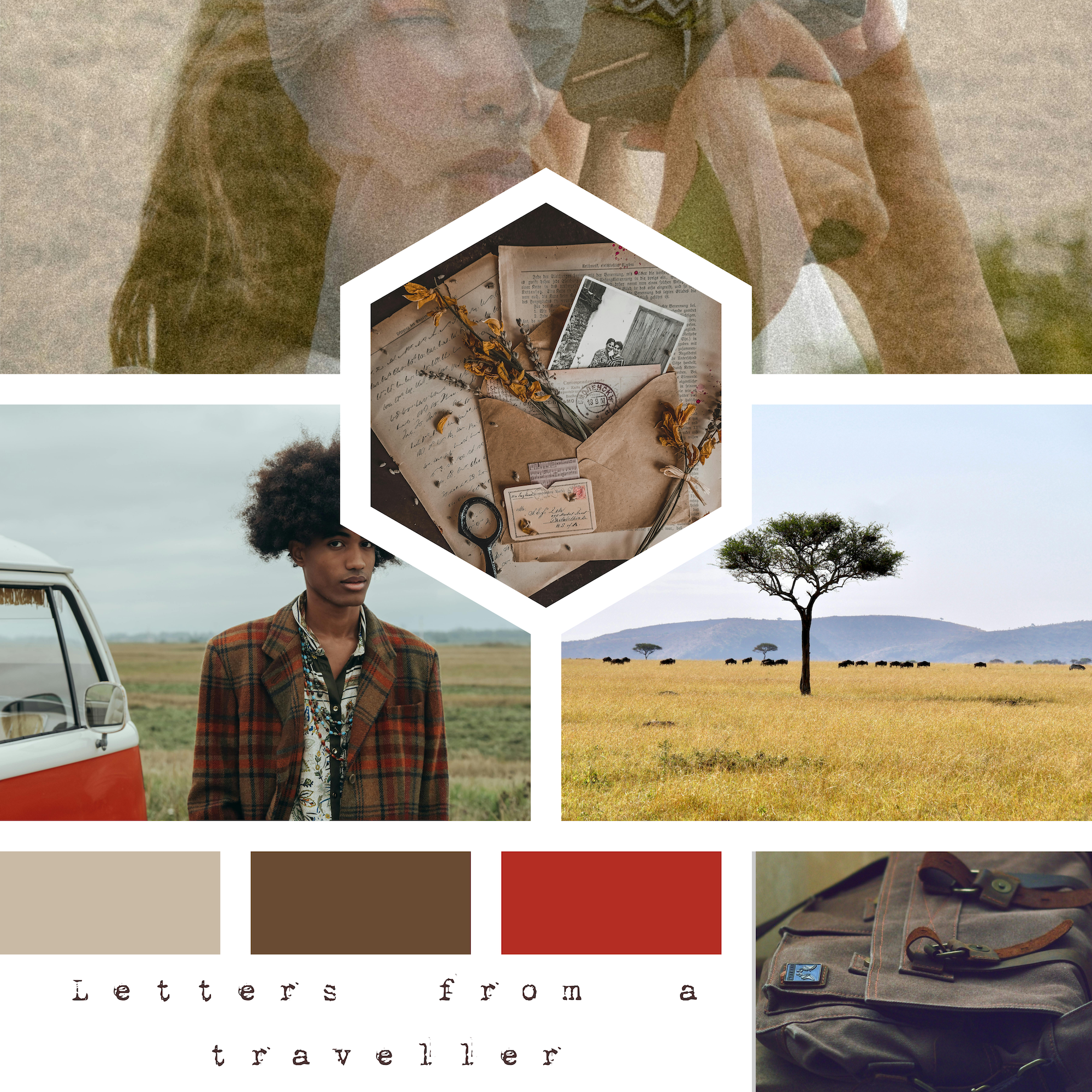
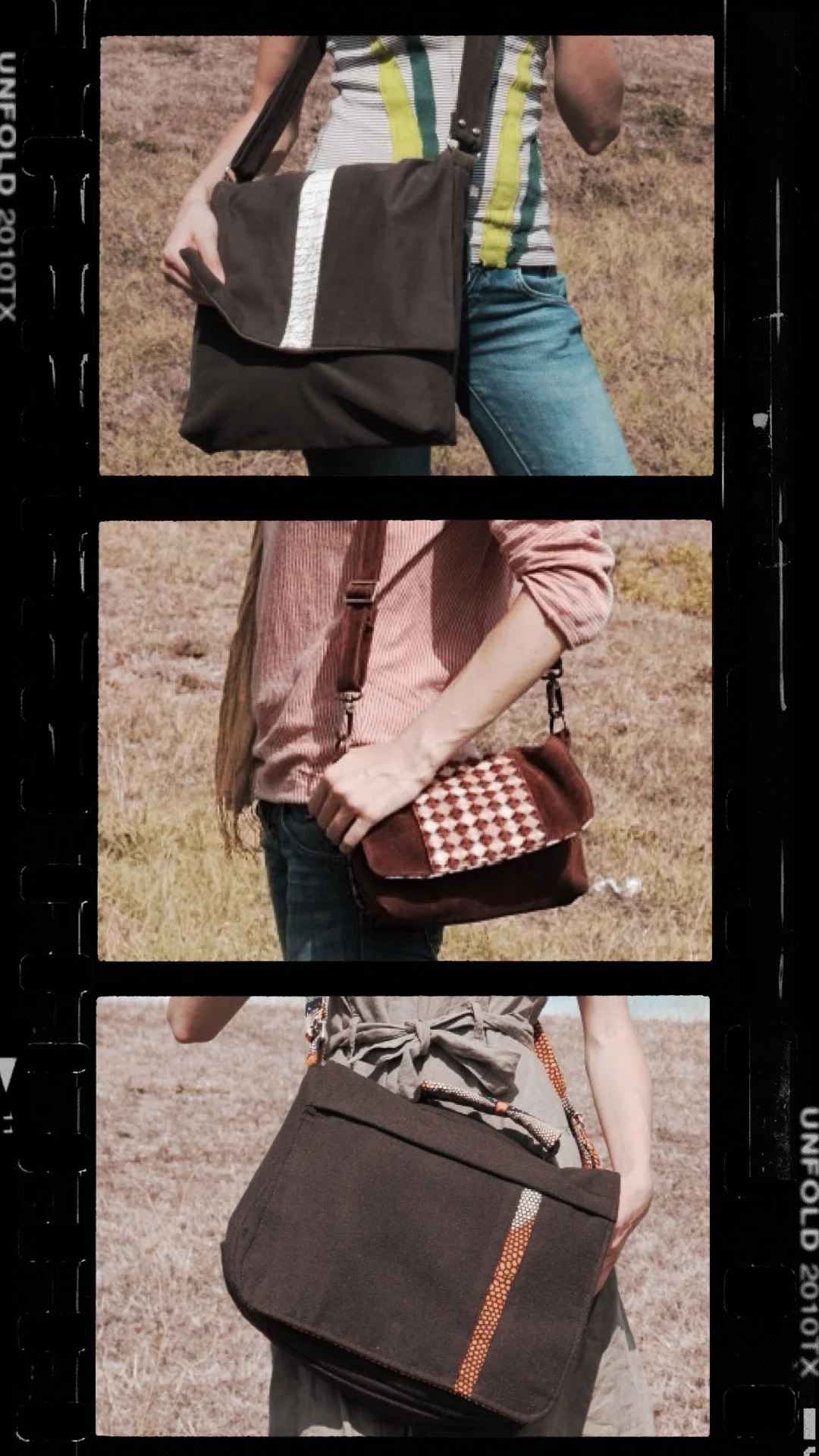
Letters From A Traveller
A collection drawing inspiration from traditional messenger bags and the idea of correspondence between distant places, translating themes of travel, memory, and connection into contemporary accessories.
Across collections, the design approach sought to balance cultural storytelling with practical functionality, ensuring that products remained relevant to contemporary lifestyles while retaining a strong narrative identity.
Output
The project resulted in:
The creation and operation of an independent accessories brand
Multiple themed collections developed around cultural and historical narratives
Small-batch production using carefully sourced textiles
Products combining functionality with material storytelling
A design practice exploring the relationship between travel, identity, and everyday objects
Through these collections, Nu-Nomad transformed cultural references and textile traditions into tangible products designed for daily use.
Reflection
This project reinforced the idea that material culture plays an important role in shaping how people relate to places, histories, and cultural identities.
Textiles, patterns, and craft traditions are not merely decorative elements; they are repositories of knowledge, movement, and cultural exchange. By incorporating these influences into contemporary products, design can create opportunities for greater appreciation of diverse traditions while keeping them present in everyday life.
Looking back, Nu-Nomad represented an early exploration of a question that continues to inform my work today: how cultural systems become embedded in material forms, and how objects can serve as vehicles for connection, meaning, and collective memory.
Nu-Nomad: Exploring Cultural Exchange Through Material Objects
Fashion & Material Culture
Objects are not passive artefacts. They carry histories, values, aspirations, and traces of the societies that produce them.
The projects in this section explore fashion and material culture as expressions of broader cultural systems. Clothing, accessories, and textiles are approached not only as aesthetic objects, but as material manifestations of social change, identity, mobility, and collective imagination.
Whether investigating adaptable garments for changing lifestyles or developing products inspired by cultural exchange and travel, these works examine how ideas become embedded in form. They explore the relationship between people and the objects that accompany them, and how material choices can communicate belonging, memory, aspiration, and meaning.
Together, these projects reflect an ongoing interest in the intersection of culture, design, and everyday life, viewing fashion as a lens through which wider societal shifts can be observed, interpreted, and made tangible.